

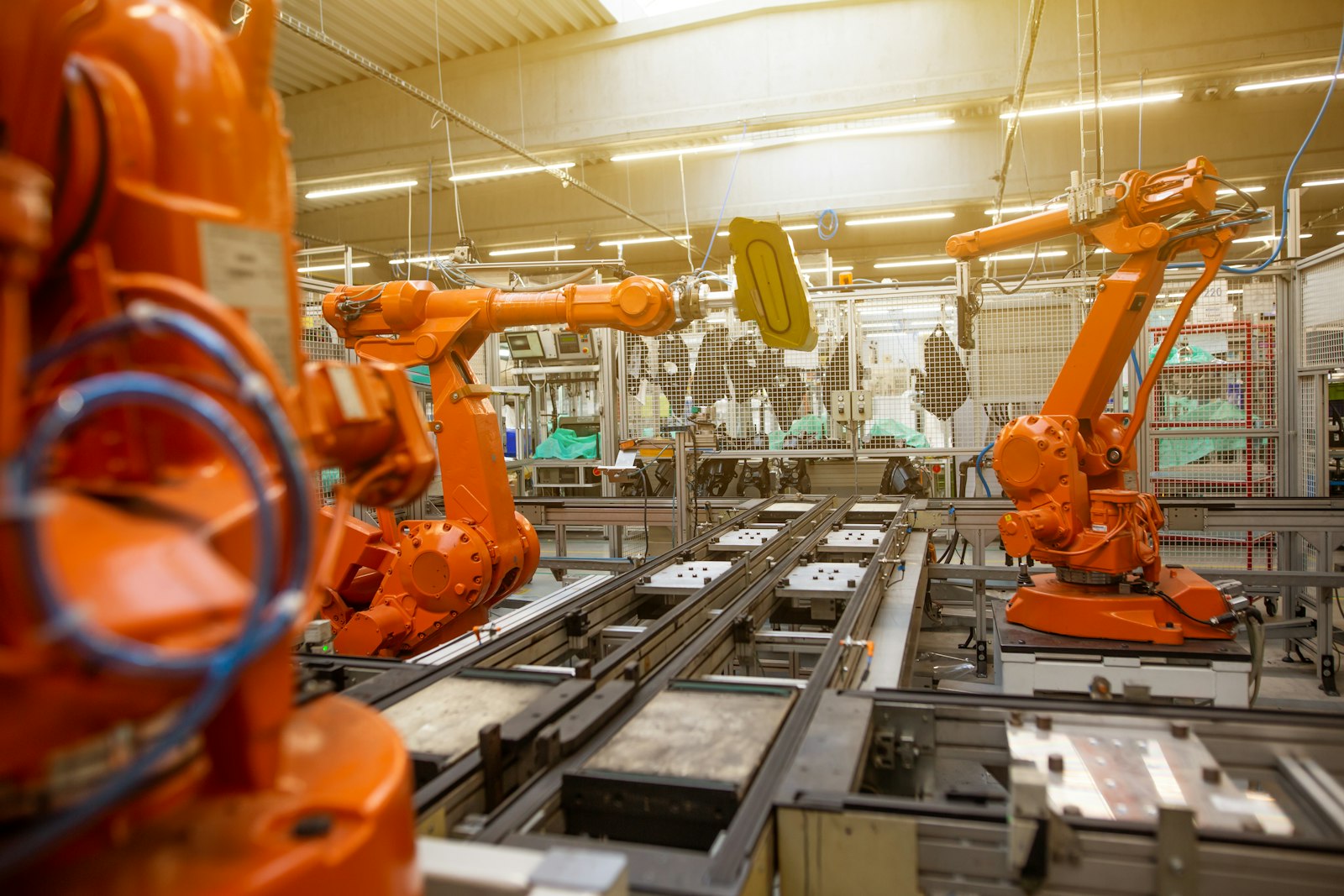
Where could domestic production create durable economic value?
Evidence reviewed: 15 September 2026
Australia should aim to be known for what it can create. Our industrial ambition can include specialised products, useful software and production expertise that customers around the world value.
The starting point is a clear commercial question. What can we produce well, for whom, and at what cost?
Build something the world has a reason to buy.
From a consultancy perspective, Australian manufacturing connects customers, capital, technology and infrastructure. Strong ideas need viable production. Viable production needs repeat demand. Global ambition becomes credible when those pieces fit together.
The problem and the practical response
- Problem: Broad claims that Australia has no manufacturing obscure the capabilities it already possesses.
- Response to assess: Map existing production, critical gaps and commercially plausible growth opportunities.
- Problem: An attractive technology can lack paying customers.
- Response to assess: Test demand and production economics before committing to large facilities.
- Problem: Smaller manufacturers may struggle to access applied research, equipment and specialist skills.
- Response to assess: Compare shared testing, extension services and supplier-development programmes.
- Problem: Domestic production may cost more than imported alternatives.
- Response to assess: Make any proposed resilience premium explicit and compare it with diversified supply or inventories.
- Problem: Subsidies can support activity that would have happened anyway.
- Response to assess: Assess additional investment and productivity against a credible counterfactual.
The strategic case
Australian manufacturing policy is most informative when framed around capabilities and economics. Identify the activities that can compete. Assess which essential functions justify paying more for resilience. Keep the costs and objectives clear.
Begin with the customer and the capability.
This report uses Australian industry data and international institutional examples. Candidate sectors and financial scenarios are options for feasibility work, not investment recommendations.
1. Australia has manufacturing
The ABS’s 2023-24 industry release reported manufacturing employment increasing by 1.0%, while industry earnings declined by 7.1%. Different measures can move in opposite directions. The historical figures refute a claim of no manufacturing but do not establish that every subsector is healthy. ABS: Australian Industry 2023-24.
This report uses that explicitly dated release rather than mixing annual industry figures with differently defined labour measures.
Australia also has existing manufacturing and industrial capability programmes. The Department of Industry describes the National Reconstruction Fund, industry growth support and supply-chain work. Programme existence does not demonstrate that each intervention is effective, but it makes “nothing is being done” an inaccurate starting point. Department of Industry: manufacturing.
2. What determines viability?
Advanced manufacturing can combine specialised knowledge, automation, quality control and design. The label does not guarantee competitive costs.
A feasibility assessment needs to examine:
- Customers and willingness to pay.
- Domestic and export market size.
- Competing suppliers and substitute products.
- Energy, materials, labour and logistics.
- Scale, utilisation and working capital.
- Certification, intellectual property and maintenance.
- Exposure to exchange rates and changing trade conditions.
Domestic value added measures something different from gross factory sales. A facility importing most components may have a large turnover but a narrower local contribution.
Industrial productivity is also distinct from employment count. A productive factory may generate greater output with fewer workers than an inefficient one. Evaluation should examine wages, skills, output and sustainability together.
3. International models
Germany: applied research connected to contracts
Fraunhofer combines base funding with industry contracts and competitively funded public projects. Its structure connects research capability with problems organisations are willing to commission. Fraunhofer: financing model.
The relevant mechanism is access to applied expertise and facilities. It does not establish that Australia should reproduce the institution’s size or exact funding shares. Industry participation and additional commercial outcomes would need evaluation.
United States: support for existing manufacturers
The US Manufacturing Extension Partnership describes work helping manufacturers improve productivity, quality and technology adoption. NIST: MEP publications.
Its client surveys provide information about reported challenges and outcomes, but self-reported impacts should not be treated as equivalent to randomised causal evidence. NIST: survey-based analysis.
An Australian comparison could assess whether practical assistance to existing firms produces better results than creating entirely new facilities.
4. Candidate opportunities for assessment
| Candidate capability | Why examine it? | Critical commercial question |
|---|---|---|
| Housing components and prefab systems | Links manufacturing to construction delivery | Is there a repeatable, solvent order pipeline? |
| Electrical equipment and replacement parts | Relevant to infrastructure maintenance | Can quality and lead-time advantages support demand? |
| Medical and scientific products | Potential specialised capability | Are regulatory and customer requirements achievable? |
| Resource-processing technology | Connects to established industries | Does local processing outperform alternative locations? |
| Industrial software and automation integration | May improve many existing firms | Are measured gains sufficient to cover adoption costs? |
These are screening candidates, not findings that each deserves subsidy.
A prefab house manufacturing division deserves particular scrutiny because factory economics depend on housing approvals, installation capacity and customer finance. A panel or component business may require a different risk profile from a complete volumetric factory.
5. Build, improve or import?
Three alternatives should be costed for each capability:
- Build or expand domestic production.
- Improve existing producers through technology, training or shared facilities.
- Secure supply through diversified imports, contracts, inventories and repair capability.
The OECD’s 2025 supply-chain review models substantial economic costs from broad relocalisation without consistent resilience gains. Its global modelling is not a forecast for one Australian project, but it challenges the assumption that producing everything locally is automatically safer. OECD: Supply Chain Resilience Review.
Local production needs a clear purpose.
6. Unit economics and the resilience premium
Suppose a hypothetical factory has A$8 million in annual fixed costs and variable costs of A$600 per unit. At 20,000 units, average operating cost is A$1,000 per unit. At 10,000 units it is A$1,400. Financing, tax and distribution are excluded.
If an equivalent delivered import costs A$950, domestic production would need a justified advantage or a transparent premium. Shorter lead times, repairability or continuity could have value, but that value must be evidenced.
Public support could be assessed through milestone-based finance, shared infrastructure or competitively procured services. The choice would depend on the identified market failure. Grants, loans, guarantees and purchases impose different risks on public finances.
7. Proposed implementation and evaluation
A staged assessment could begin with a capability map and buyer interviews, followed by independent technical and commercial feasibility.
Before capital commitment, obtain credible demand evidence, assess downside utilisation and identify existing providers that might be displaced.
A limited demonstration would test output quality, labour requirements, energy use and customer acceptance. Expansion would depend on repeat orders and a credible path to operating viability.
Metrics should include additional private investment, domestic value added, output per hour, defect rates, export revenue where relevant and public cost per additional outcome. Count subsidy dependence explicitly.
Governments could examine coordination, research access and infrastructure constraints. Firms would retain responsibility for commercial decisions. Independent evaluation should assess benefits beyond recipients alone.
8. AI, skills and limits
AI could assist design, maintenance, scheduling and inspection. Each use needs verification because errors can create scrap, downtime or unsafe output.
More general AI capabilities remain uncertain. A project that is viable only after an unspecified AGI breakthrough lacks a usable present investment case.
Automation may change staffing needs, linking industrial strategy to workforce transition. Training and maintenance capability should be evaluated alongside equipment purchases.
A factory opening is a milestone. Repeat demand is the test.
Direct answers
Does Australia need to manufacture everything? No evidence here supports that conclusion. The appropriate mix depends on cost, importance, substitutability and risk.
Would a new factory automatically create prosperity? No. Demand, productivity, financing and opportunity costs determine whether it adds durable value.
How should government support be judged? By additional benefits relative to realistic alternatives, with transparent costs and an explicit review or exit mechanism.
The DivineLab Worx approach: turn setbacks into evidence
Dainu Devis founded DivineLab Worx to bring business strategy, technology and infrastructure into one practical discipline. His founding belief is simple: failures should become evidence for a better system.
The team’s guiding principle is to treat technical failures as hard engineering data. In business and public-service delivery, that also means examining costs, outcomes and people’s experience. A mistake becomes useful only when it is investigated and the lesson changes what happens next.
Record the failure. Find the cause. Test the improvement.
In manufacturing, a rejected batch or missed delivery contains information about the production system. Capture the operating conditions. Trace the cause. Test a correction before increasing volume.
The same discipline applies to the business model. Weak repeat orders may reveal a customer problem that better machinery cannot solve. Engineering evidence and commercial evidence belong in the same investment decision.
Fix the cause before multiplying the output.
This is the discipline DivineLab Worx aims to bring to Australia’s economic transformation. Tighter feedback. Clear accountability. More resilient systems. Our ambition is an Australia whose ability to learn and deliver earns trust around the world.
The long view
Australia can pursue a stronger global industrial role through capabilities that solve real problems. The path requires selectivity, commercial discipline and patient development of skills.
For DivineLab Worx, the strategic task begins before the factory is built. Understand the customer. Test production economics. Connect applied research to delivery. Establish why the capability can endure.
Successful projects could strengthen local supply and create products or expertise for international markets. Each project must demonstrate that potential on its own merits.
Turn knowledge into capability. Turn capability into value.