

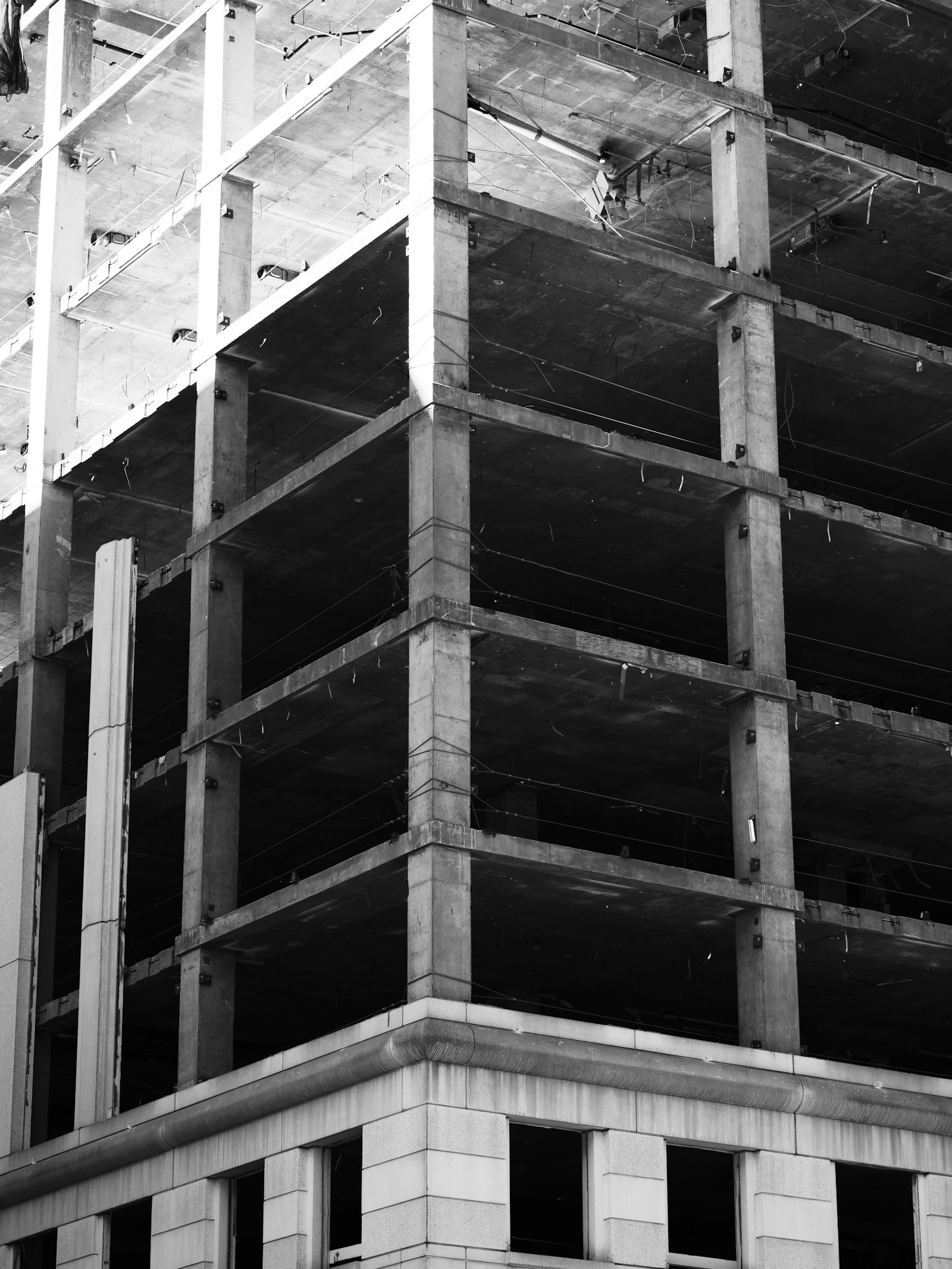
At Divine Lab Worx we hold one belief above the rest. Good outcomes are designed, not hoped for. Strategy is a sequence of informed choices made early enough to matter. Not a set of slides made after the real decisions have already set hard.
Apply that lens to safety. The Northern Territory and Western Australia are at a design moment. Most mature economies passed it long ago.
Designed in versus bolted on
Picture two mine sites.
The first was built years ago. Cameras went in for security. Sensors were added piecemeal. Procedures grew by habit. Now a safety team holds it together with inspections. Any new technology has to fit around a layout never meant for it. It works. It works against the grain.
The second is still being designed. Here you can decide where people and machines meet. Where risk gathers. What data the site should capture. How that data becomes a live safety picture. The cameras serve safety, not just security. The data is built to be read in real time. Nothing fights anything.
The second site is not a little safer. It is safer at a lower cost, for its whole life. Because the safety was designed in.
The north is at the second-site moment
This is the advantage the Territory and WA hold. Older regions do not.
A large share of the north's next wave is still being planned. Critical minerals. Gas. Energy. The systems are not yet fixed. So the region can design safety intelligence into them from the start. Not spend a decade retrofitting it later.
Older economies would trade a lot to be in this position. They are locked into legacy systems. The north can build correctly the first time. Wasting that by copying everyone else's bolted-on mistakes would be the real loss.
Design it the concurrent way
Our method is concurrent, not sequential.
We do not settle process, then economics, then bolt on safety at the end. We develop them together. Each is tested against the others while change is still cheap.
On a site, this means safety, efficiency and cost sit in one conversation. A layout that keeps people away from mobile plant is safer and often more productive. A data architecture built for safety also serves process and quality. The trade-offs that feel forced when safety comes last tend to dissolve when it comes first.
This is where a capability like Flagman.AI belongs in the design. Not a product bought at the end. A layer the system is planned around. Design the system to feed it, and the whole thing is stronger.
Designing single systems well is how a region builds a coherent economy, not a pile of disconnected projects. Dainu Devis sets out that larger design in Why the Northern Territory should become Australia's semiconductor materials hub.
The cost of the wrong sequence
There is a hard number behind this. Retrofitting safety into a running site is expensive, disruptive and never quite finished. Designing it in adds little upfront and removes a permanent drag for the life of the asset.
Multiply that across the dozens of projects the north will build this decade. The difference is not a rounding error. It is the difference between an industrial base that is efficient from day one and one that spends its first decade fixing itself.
The design is the opportunity
The north is not short of assets, ambition or capital interest. What decides the outcome is the quality of the design applied to all three.
Safety is a small, revealing case of a bigger truth. The regions that treat design as the work, not as decoration added later, build economies that last. The Territory and WA are standing at exactly that choice. The sensible move is to design it in.
Where this shows up in a real design brief
Ask a typical project team for their design brief and safety usually appears as a compliance line. A checklist reference. A regulation to satisfy.
A concurrent brief reads differently. It asks where people and machines will interact before the layout is finalised. It asks what data those interactions will generate, and whether the site is wired to capture it. It asks how a safety event will be seen, scored and acted on, in the same paragraph that describes throughput targets. Mine site planning done this way produces a different site. Not a safer version of the same plan. A genuinely different plan, because safety was one of the forces shaping it from the first sketch.
The uncomfortable truth about retrofits
Every operator who has tried to retrofit safety technology onto a mature site knows the same frustration. The cameras are in the wrong place. The network was not built for continuous data. The workflow assumes a supervisor walks the floor, not that a system watches it.
None of this is anyone's fault. It is simply what happens when a system is designed for one purpose and asked to serve another later. The fix is rarely elegant. It is usually expensive, partial and permanently a little awkward. This is the fate waiting for every new project that treats safety as an afterthought today.
What concurrent design costs versus what it saves
Building safety intelligence architecture into a new site adds a modest amount to the design phase. A few extra conversations. A camera plan drawn with two purposes instead of one. A data architecture specified once, properly, instead of patched twice.
Against that small addition, weigh the entire cost of a retrofit years later. Downtime during installation. Rebuilt data pipelines. Years of degraded coverage while the gaps are found and closed. The arithmetic is not close. Concurrent design is cheaper by an order of magnitude, and it delivers a better system on day one rather than an adequate one after years of patching.
A principle for every project in the pipeline
Here is the standard I would set for any northern industrial project entering design today. Safety intelligence architecture is specified in the same phase as the process flow, not after it. The two are reviewed together, by the same team, against the same milestones.
This is not an exotic requirement. It is simply concurrent design applied honestly, rather than as a slogan. Every project that adopts this standard now builds a permanent advantage over the projects still designing the old way. That advantage compounds every year the site operates, because the cost of a bolted on system never fully goes away. It just keeps being paid, quietly, for the life of the asset.